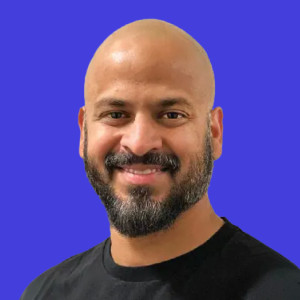
Select Highlights of the Interview with Karthik from India
EB-5 Investor in the EB5AN Twin Lakes Rural EB-5 Project
[EB5AN] had a 100% USCIS approval rate, which was huge. And for the Twin Lakes project specifically, all the jobs had been created already… there were so many other regional centers that I had come across and projects where they were taking your money but construction hadn’t even begun.
I was told when I applied that I would get my EAD in about 60 days, which I did, and my I-526E in 12 months. I got mine in exactly 12 months. Both of those factors were key in me choosing a rural project, because processing times for people from my country of origin are ridiculously long.
I can now focus on my career and everything that I want to do. Now that I’ve got my I-526E, it’s only a matter of time before I’m eligible to apply for citizenship, which I want to do. And once that’s taken care of, I want to use the rest of my time to do what I love.
Full Interview with Karthik from India
EB-5 Investor in the EB5AN Twin Lakes Rural EB-5 Project
Transcript of the Interview with Karthik from India
Why I Made an EB-5 Investment
Hi, everyone. This is Sam Silverman, managing partner of EB5AN. Thank you for taking time to join us on today’s webinar. Today, we’re going to be speaking with Karthik, an EB-5 investor from India who joined our Twin Lakes Georgia rural EB-5 project and who recently received his I-526E temporary Green Card approval. So first, Karthik, congratulations on the recent approval. We’re really excited to hear that news.
How I Chose My Immigration Attorney
To start, I guess maybe introduce yourself, share a little bit about your background, experience, what led you to the United States originally, and why EB-5 was the next step for you in your journey in the U.S.
The reason why I pursued EB-5 was that given what I do and the nature of my work, it was so hard for me to secure a long-term solution to immigration because the H-1B, which is something that most people consider, wasn’t a viable option given that you have to apply for it through an employer. And since I was more of a freelancer, it didn’t really make sense—which I’m not now, but at the time I was. And it didn’t really make sense for me to apply for something that I wasn’t even eligible for.
And the other option for me was an O-1, which, again, is something that’s very hard to get. At least when you’re starting out and you’re a new college grad, you don’t have the credentials, you don’t have the awards, and there’s so many other criteria that you have to fulfill when it comes to applying for an O-1. So you have to be somebody that’s a very important figure in the industry, and I didn’t have the accolades that it took. And I mean, honestly, I feel like now I’d be in a position to apply for it given the progress that I’ve made, but I wasn’t at the time.
So that led to being in this conundrum where I wasn’t really sure how I was going to proceed, and EB-5 was pretty much the only option on the table for me, because it was the only one that I could apply for that, well, one, wasn’t employment-based and, two, it was something that I could do on my own. And I wasn’t beholden to any employer, and I didn’t have to depend on somebody else validating who I was and how good I was at what I did. It was something that I could do by myself to solve my immigration problems for good. And given that I do work in the music industry, it’s something that I needed, because I live in Los Angeles and this is where the industry is, and I needed to be in LA in order to build my career and get better and network. And I think it was the right decision for me given what I do and who I am.
Why I Invested in EB5AN’s Twin Lakes Rural Project
Got it, got it. Okay, that makes sense. So once you did that initial research and you figured out “Okay, EB-5 is going to be the right fit just given my long-term career goals, the flexibility that I need on the employment side,“ once you came to that decision, what was your next step? What did you do to start advancing that decision and make that happen?
And it was, I think, through another EB-5 person that I met my lawyer, Anahita, and she’s the one that told me about EB5AN and the Twin Lakes project. That’s when I did my research into learning about the project, what it is, what it does, its results, and how viable it was for me, not just in terms of securing immigration, but also monetarily. And that’s kind of how it began.
The whole thing happened at the 11th hour because I was quite late in my process of doing research and trying to come up with a game plan for doing the EB-5. I’m glad that I did it when I did, because if I had delayed, then I probably would’ve been too late to adjust my status from within the U.S. because I was already in the country at the time.
Benefits of Making an EB-5 Investment
Got it. So starting with the immigration attorney, how did you decide to hire Anahita? Did you interview a few people and then go back to her? What was your thought process in terms of going with her versus some of the other immigration attorneys that you were in conversations with?
She is somebody with a good track record. She has good references. And she’s worked with regional centers. She’s quite tight with them, and she understands how these projects work. And she’s somebody that understood how the concept of the source of funds can be presented in the best way possible in a context that is very catered to my country of origin, and she’s very good at that. And she’s somebody also that I felt like was willing to go to bat for me and get my petition approved. And she was very on top of things—she was very responsive. She ensures that there are no loose ends.
And after having a couple of calls with her, I just knew that she was the right fit for me, and I didn’t want anyone else handling my case. So yeah, I mean, to start with, she was the only lawyer that I spoke to, but I didn’t need to look further because she was the one for me.
Summary: My Advice for EB-5 Investors
Got it, got it. So you decided to work with her, and then tell us a little bit about what that source of funds documentation process was like. How long did it take? Was it nights and weekends for a week or two providing documents? What was it like going through that documentation process with her?
And the whole process I want to say took about 60 days, to get everything consolidated and to have the funds arranged and to transfer the funds from my home country to the U.S. and then to the escrow account. The whole process was very seamless. And for me to get together my source of funds, it took about 60 days, maybe a little less.
Got it. Okay. So during that source of funds documentation process, what was your approach to researching and evaluating potential EB-5 regional centers and projects? What was your approach to doing that?
Plus, for most EB5AN projects, the EADs and the advanced parole documents were being issued in 60 to 90 days, which is exactly what happened to me. And I needed that because I had a job at the time and, in order for me keep my job, I needed my employment authorization. So I had an easy time working with my company to ensure that they would wait until I got it, so that was very nice of them.
But I think all of those things really just fit together. It was very cohesive, and that’s the reason why I picked EB5AN and the Twin Lakes project and Kolter specifically.
Got it, got it. And I guess on the developer side, what about Kolter was attractive to you in terms of the company that really is responsible for using your EB-5 funds, executing the business plan, building the project, and ultimately making money and then being able to repay the EB-5 capital back to investors?
Then I came across this testimonial from a guy named Ken Jones, who I believe is the president and CEO of Third Lake Capital, which is an investment firm and an equity partner of Kolter. And he basically talked about how in the 2008 financial crisis, Kolter made sure that every single one of their investors were paid, unlike most companies at the time that went completely bankrupt and investors were kind of screwed over and all that. So after reading that and after reading Kolter’s history and after reading the extent of their involvement in real estate and the projects that they did, it seemed like the right fit.
And the project itself had created all jobs, and the homes were being sold at an amazing rate, and the business was generating positive cash flow, which was very important. I think it kind of depends on the sector of the EB-5 project that you choose, but ideally, you’d want to pick something that generates good cash flow, which Twin Lakes was doing, thanks to Kolter. So that really went into my decision to choose a Kolter project, and I feel very comfortable with investing my capital with Kolter.
Got it. And in terms of the EB-5 aspects of the project, you mentioned one of them, the advanced job creation. Obviously, that’s a critical piece to obtaining the permanent Green Card later on. What about the rural TEA designation of Twin Lakes? How did that fit into your decision for Twin Lakes specifically, and then also when you were evaluating other projects?
I guess stepping back away from the project itself and just going back to the regional center, during your research, what were some of the key differences that you saw between EB5AN and some of the other regional centers just in terms of transparency and access to information? What was different that you saw and made you more comfortable working with EB5AN?
For me that’s very important, because even though I may not be as well-versed as, let’s say, my dad, who is in this business and he can perhaps read a document and find the technical details a lot better, for me as an investor, it was about basically working with people that I felt like I could trust. And EB5AN, right from the get-go, was very responsive. It was quite helpful. It showed me as an investor what I needed to know in order to make the right decision, which I didn’t find in any other regional center. So it was kind of a no-brainer to be honest, and I’m glad that I did this.
Got it. And so now looking back through the process—now you’ve got the I-526E approval; obviously, you’ve taken advantage of the EAD and advanced parole with your current job, which has been really convenient—what are your long-term goals in the U.S. in terms of becoming a citizen and settling down? What does the future look like now that you know that you’ve got clarity on the immigration side?
So I currently work in artist management, but going forward, I would want to work at Universal, which is my dream label. I’d go in there with a mission, which is to empower artists and everything that they do, and it’s my duty to then bring equity and fairness to the world of music and to create an atmosphere where everybody, including artists and people on the business side, can coexist without there being a need to feel like you got to rip somebody off, which is how the industry has operated. So that’s my grander plan. That’s what I want to do, which is to make the music industry a better place and to continue doing what I love, which is empowering artists.
Got it, got it. Well, we’re very excited to see how that plays out. And I guess just final topic, having now gone through the process—source of funds, doing the research on different regional centers, evaluating projects, making the investment, filing the applications, getting approval—what kind of high-level advice would you have for new potential investors who are just becoming aware of the EB-5 program and are considering making an investment in a project going forward?
So it’s important for you to find a project where they have a good track record. The regional center is one that also has a good track record and invest in projects that are trustworthy and that not only make an effort to return your capital, but also are good in terms of the immigration front. So you have to find someone with a high approval rate, and you have to also find a project that you kind of are familiar with so that you can answer all these questions and start ticking everything off the box.
So that would be my 40,000-foot view advice on how to go about doing this. And I mean, once you get a little deeper too, you’ll find that, within the same industry, you can have two very different projects, and you want to pick the one that you feel like is the right fit for you—and one of them being rural versus urban. Again, that’s something that the investor has to do some research on to see what they feel like is the best fit for them. And then you look at the financials, and then you look at job creation, and then you look at processing times. So all these things then kind of fit together.