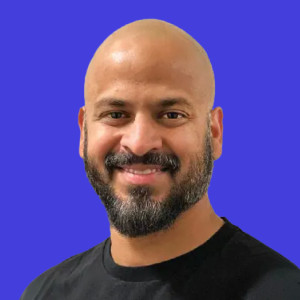
Select Highlights of the Interview with Shiv from India
EB-5 Investor in the EB5AN Bay Creek Rural EB-5 Project
- “One thing that I had was the relationship I had built with the folks at EB5AN. It was really helpful to clarify a lot of my questions. And overall, there is very much transparency. The information is available on the website for the ongoing projects. And if you have any questions, you get back a response very quickly.”
- “That’s what I really liked about EB5AN, and I would highly certainly recommend EB5AN projects. You will definitely find the kind of project you’re looking for, because I think there is a large inventory of projects.”
- “I would say move fast and work closely with the legal team. Do the constant follow-up, because those folks are also having multiple clients.”
Full Interview with Shiv from India
EB-5 Investor in the EB5AN Bay Creek Rural EB-5 Project
Transcript of the Interview with Shiv from India
My Background and Why I Chose EB-5
Hi, everyone. I’m Sam Silverman, managing partner of EB5AN. Thank you for taking time to join us for today’s webinar. Today we’re going to be discussing our Bay Creek rural senior EB-5 loan project. We’ll be chatting with Shiv from India, a recent EB-5 investor who joined the project, and getting information from him about his experience, his process, and what led him to explore an EB-5 investment. To start, Shiv, thank you for taking a few minutes to join us today. To start, would you mind introducing yourself and sharing a little bit about your background, your bio, and what led you to pursue EB-5?
My journey, if I start, I would start from the beginning since when I came to U.S. I, as a software engineer, came first to USA in 2005. I was in U.S. for only couple of years, but then somehow, it didn’t click for me, so I went back. And I got an opportunity in 2015 which was really good from a career point of view, so I moved with family back to U.S. And at that time, still on H-1, still using the same H-1 I had received on the 2005, and then my employer did my Green Card petition, so prior to that, 2016.
Everything is fine. I changed the employer. I am with another employer now and retained the same priority, and with the same employer for five-plus years. I had never faced any immigration issues like the visa and in general. My wife is on edge for EAD. We had pretty a normal immigration experience.
And the things, like my daughter, when we moved here, she was in fourth grade, and last year, 2024, she went to college. Now she’s going to age out in 2027 next year. And then we just started to … Because until then, you are really not thinking a lot ahead, right? And that’s something I think a lot of parents I have seen who are in similar situation as mine, they do—be here, and they just keep things to the last and hoping the best would happen, right?
And I was hoping that 2016, priority date, by the time 2015 would come, things would be fine, right? But it did not. And considering the current timelines, it is not realistic that I would get the Green Card due to the backlog in … don’t think like in next 10 years, right?
The main challenge, personally, I was not having any issue, but the kids, my daughter, since she would be aging out … and we did try F-1 route from here, but there are risks with F-1. We got an RFP, and when we were thinking more and more around that … This happened around early last year, around April 25. And due to new administration policies and others, the F-1 visa, it was really having hard time to follow that path.
And the future also there seemed like you had to go to the same route. And since my daughters, two daughters, both are born in India, they will go through the similar experience of if they want to … They have spent their whole life here, right? They grew up here. They consider this as their country, and for them, it would be very hard to, again, go through the similar experience of H-1 and others.
So a friend told us about EB-5, and that’s where my journey with EB-5 exploration started. Sam, should I continue or you want to … ?
Finding An Immigration Attorney
Got it. Okay. No, that’s great. Yeah, so your friend mentioned EB-5 might be a potential solution. That’s a common problem with kids getting older, aging out, that weren’t born in the U.S. So please, continue. You learned about EB-5 as a potential solution, and then how did you take it forward from there?
So I started following like multiple blogs and the potential retrogression in EB-5. So I took it more seriously. I started evaluating my options from a funding point of view: where I stand, what I need to do. And during those conversations and reading other people’s, how they are working on their SOF—that is another term, source of funds—how they are preparing for the source of fund detailing and got to know about different ways you can have that source of fund, like HELOC. You can use SDIRA, you can use 401k-based loans, and you can do the liquidity access line, which is mostly you place your equities as a collateral and you take a loan against that. Those kind of options, which when they came in those forms, and when I did my analysis, I felt like, okay, if I stretch my limit a bit, I could make this work.
And there were also a few folks who were going through the route of using … What do you call that? Unsecured loans which is offered by some assets. I was also evaluating that part, that those loans were new in nature, were recently started, and there was a bit of skepticism around that or a bit of uncertainty around that path. But when I did further analysis on that, I had that as an option as well.
So I kept all these options for source of fund, and I was also evaluating options around selling my Indian assets and bringing that fund over here, but decided against that because of the additional complexity and the legal due diligence needed from both the lawyer plus needed an Indian … a lot of additional details. I felt like that would further delay the overall process, and I was trying to get the 526E filed as soon as possible. Those timelines really made my options a bit limited.
The next step after figuring out the source of fund part, obviously, the next one was like which lawyer should I be working with. Again, the community was to help. Based on the due diligence I did, there are few big firms who offer their services, and also, there are a few reputed private firms which offer the legal representation for you. And based on, again, community feedback and looking at what … Based on what is all included in there, the services, that kind of analysis which was done, because you have 526E, then … It’s a long journey, so you need to look at not only from the beginning. You have to think about the later stages when you have to remove those conditions. When we look at the whole, end to end, the timeline, you have to work with somebody who has been in the space for a long and the people have a good experience with them. I shortlisted on a specific legal firm, and—
How I Chose EB5AN And the Bay Creek Rural Project
And as you were doing that analysis and research on potential immigration firms, what was most important to you? Bigger firms, smaller firm, the price, timing? After you did a few of the interviews, what stuck out and made you decide to go with the firm you ultimately hired?
Obviously, the financial cost was certainly there, involved. But based on my analysis which I had done, more or less, they each are very competitive with each other. That was not a key factor, honestly. It was more around getting the commitment from the lawyer team that it would be completed within … the petition would be filed within, let’s say, a month or two. So the due diligence and the completion was a key reason.
Final Thoughts
Okay. And remind me, which law firm did you end up hiring after going through the diligence process?
Okay, got it. And once you had decided to go with Darren, walk us through what that process was after getting him engaged in terms of gathering documents and working closely with his team to get it all organized. How long did that process take from engagement to being finished and ready to pick a project? And just share a little bit about what that process was like for someone who’s considering going.
And also, the kind of source of fund is also very crucial. If one has a single source of fund, from the one source, like if you’re just using your equities and using that as one, it is much easier. Then you have a much cleaner … It’s much easier to get all the information from one place.
But, for my case, I was using multiple. I was trying to get HELOC. I was trying to use SDIRA and also the equity-based, like liquidity access line, so using that as a collateral. For HELOC especially, it took me really long, because I had to also gather evidence when I bought the house, which was around eight years back. I had to provide documents for that house purchase, like how that funds were sourced, that kind of detailing. The main problem was banks usually only keep statements for seven years. Some banks keep for more, but a lot of the top banks, they only keep statements available for seven years. For some of the transactions, I was not able to get the statements prior to seven years.
That was really a challenge, so that took a bit more time, but that is for a house purchase. It’s kind of one level below. I’m taking a HELOC, but the kind of SOF preparation that the legal team does, which is to make sure that we are covered if there any follow-up question comes, that was … I tried to gather the information. Somehow, I had some historical document which I had used for the original mortgage, which I had shared. But that really, those statements, historical ones … so I would say if you are trying to get the sources, having those historical statements really helps. If you’re starting, make sure immediately you go and start to download those, the historical statement for all the sources that you’re trying to use, so that you are covered there.
And for the other ones, even for the equities, so you had to go and … I was diversified into multiple brokerage houses. I had to consolidate all in one place. I went with a liquidity access offering of Morgan Stanley, which was a single place where you put all your equities, and then you can get a liquidity access line against that. I consolidated that, but that also involved getting statements from all these brokerage house for all the years in the past. Really took a lot of time there to collect all those documents. That was one … Those things for me took more time.
Then, obviously, you have to go back and get all your immigration history, like previous visas, all the documented fee evidence that is required for your … When you are filing from the U.S., you can do the concurrent filing. You can file your 485 and your advance parole and those documents together with 526E. For all of them is additional information which is needed, like your salary slips, your spouse salary slips, and your tax returns. Tax returns also, it has to go.
All that information, considering the amount that is involved, it really does take time. If you take some time off, I would say you would be able to get it done sooner.
And one crucial thing over here is the birth certificates. A lot of folks who are born in India sometimes don’t have the birth certificate in English. You need to make sure you have somebody … you have those in English. You have to get those translated, all those. So those are like a crucial. Your marriage certificate also needs to be there. So I had to make sure like all of these documents for me, I had those birth certificate and others ready—not for EB-5, but somehow I had heard about this kind of issue for different other steps. I had just prepared it that way, so I had those ready.
And also, other than that, I would say that’s what took really a key time which was taken. All this information was shared by the lawyer team. I think it was just the list of documents that I needed to share with them. And once I gave them in parallel, they were trying to make sure that all the funding source which was identified is backed up with the documentary evidence and there is a clear paper trail from what funds were used to buy the equities, whether those were RSUs, whether they were your … you purchased those through your salary. All those document, it was verified by the legal team.
Got it, okay. Now that you’ve gone through that process—you’ve gotten your application submitted, Darren approved the source of funds—what advice would you have for someone considering EB-5 with respect to selecting an attorney and going through that process?
But in general, I felt overall, there are few other attorneys that usually are … Once you start your due diligence, any potential investor, when he does this due diligence, he would hear certain names repeated frequently. I would consider based on when they interact and based on their priority and how much sooner they can get their petition filed. I think that those would be the key criterias.
Okay, perfect. That makes sense. All right, so shifting topics now and going over to the regional center and the projects. Let’s first break that down and spend some time talking about the regional center. As you had engaged Darren to help with your application, source of funds, tell us about your experience researching potential regional centers and what your conversations were like with EB5AN and other regional centers as you were exploring potential companies to look at particular projects with. What were some of the differences that you found between regional centers?
My primary goal was … When I started with my journey, I was thinking initially, even with Darren’s team, that, okay, I’ll opt for something which is an unsecured loan option by the RCs. The interest rate offered over there was too good to be true. And considering the commitment needed from that, I felt like anybody naturally would be inclined towards that, because you don’t have to sell your equities or get others. I initially had that as my investment, how I would fund my $800K, and I did evaluate few RCs which offered those, and was very much certain that I would go with one.
But then, as I did more and more analysis, and I heard a bit more about these options, potential risk, and why the RC-affiliated loans could have a potential scenario where it does not qualify based on the investment at-risk rule that USCIS has. Those gave a bit of doubt in my mind, which made me rethink about the whole funding part. I was able to ensure that if I not go with the RC loan, I can still have the sufficient … I could leverage against my equities to fill that gap. I preferred that route, which gave me more peace of mind and lesser risk, because this is already … Everything is already a risk. So I wanted to cover that part.
Once I decided going against that, then I thought, okay, infrastructure project was the one which I should go for, because there were hardly … a couple of infrastructure projects in the market, and I should go for them. But it’s just 5%, and retrogression, if it kicks in, as potentially … And there were many, I think, infrastructure projects which were in pipeline. I was, again, not really sure about that.
Then obviously, the next one, which was a bit less risk, was the HUA, HUA projects, which I evaluated a few, and they always seemed good. The only problem with those were they were not having priority processing, and there was, again, a lesser amount of quota for them, I think.
I then shifted focus on the rural one. I evaluated … Between when I dropped my criteria for RC-affiliated loans, I then really started looking into EB5AN and very seriously, because the kind of projects which were there, they all look pretty solid, and they’re having … The main thing that I was that time looking for then was the trifecta, which I would say I was looking for something which was rural, which has a senior loan, and it had a quick deployment and shorter loan term, and also, the 956 should be approved. I was going through that trifecta and trying to figure out which one qualifies from EB5AN.
And during this journey with EB5AN, I had a very good, I would say, advisor from EB5AN, Jordan. I really felt like Jordan and the way he explained or engaged with me had been one of the key—what do you call—reason, for the … Yeah, I’m going with EB-5. He was very, very transparent, and he never oversell anything. He was very grounded. He would really be very … I would say any conversation you have, I had with him, and it was all realistic. It was conservative and making sure that you understand the potential, all the risks. They were not only related to EB5AN in general but overall the EB-5 program. I feel, with Jordan, those conversation were really very helpful. That’s one of the key reasons, the conversation with Jordan I had. And further on that, right, once I had looked at EB5AN’s multiple projects, there were quite a few projects which fit in this bucket.
You want me to continue, or, Sam, you have …
I think before we jump a little more into the projects, how was that conversation and experience working with Jordan about the process and about different options? How did that experience with him differ from some of the other conversations you had with other staff from other regional centers? What was different in your mind that made you feel more comfortable with Jordan?
But with Jordan, right, there was more … I would say my conversations with Jordan, when I look back at my time, they span over five months. So right from the very early exploration, I was engaging with Jordan. Then during the due diligence process, during subsequent steps, and even for post-investment, I think it continued. It was not a one-off sales pitch or anything like that. It was very much a relationship—I would say sustained relationship.
Jordan’s role here, he was very transparent. He always provided the realistic, as I say, like any downside scenario, not just the best case. He was very transparent. The HUA potential, [inaudible 00:32:58], that one … He never forced anything on me. It was more towards let the SOF and other things move at its pace and making sure he’s available for any question. So he wasn’t really pushy. I would say he was more patient and let the process complete, SOF and others. I really appreciated that.
And he really had very strong, I would say, depth of EB-5, the internals. If there was a question people had … I had a question around the sustainment period and about … which are some pending litigations around the sustainment period interpretation, around that and others. He was very much aware and had very clear opinions around that. And he never … That’s something I really appreciate for Jordan, my interaction with him.
Okay. Okay, got it. All right, so let’s spend a few minutes now on the project selection. You mentioned EB5AN had a number of projects that met some of the criteria you were looking for. Walk us through what that criteria was in terms of project characteristics: rural versus urban, senior loan versus non-senior loan, construction underway. What were some of the things that you were really looking for in terms of project characteristics? And then what ultimately led you to focus in on the Bay Creek project?
My trifecta, which I mentioned earlier, was very clear, which was … First of all, rural. I wanted to do rural because of the faster processing for those visas. Then senior loan was another criteria. And the deployment time was also very crucial, deployment time.
Bay Creek, when I did investment in August time frame, it was new. And the only thing which was not there … one more thing which I was looking for was the partial investment. That is another key thing, that this project was open for partial investment, where I could do an initial commitment of … I did in two parts. I did the initial commitment with the partial investment, got into the project, and then, end of last year, I did the complete commitment. So the partial investment was also supported.
The only thing which was not there for Bay Creek which I was looking for was 956 at that time. But that was the only thing. That’s where my legal team helped me there with this. With EB5AN’s past record for 956-related approvals and everything, I went with that risk, that the 956 not being approved. I still believed in the overall project.
I looked at the documentation which is required for 956F, the project documents, which were meeting those criteria. It was in the targeted rural area, the job creation numbers made sense, and there was no concern around 956 not being approved. The Bay Creek felt like meets all my criteria.
That’s the main reason I would say I went with it, because it made my rural, senior loan, a fast deployment, and the loan duration was also relatively smaller compared to other projects which were there, and the partial investment. Those were the key things which made me pick Bay Creek.
Got you, got you. Okay. And how important was the rural aspect of the investment to your decision to go with Bay Creek?
And in here with Bay Creek, the other factors also help, where the loan term was shorter, which is similar to HUA projects that I have evaluated, and it was a faster processing. So made more sense to go with the rural, the Bay Creek project.
Okay. Okay. Got it. Okay. All right, so once you had decided Bay Creek was going to be the project for your filing, tell us a little bit about what that process after making that decision was like? Working with Jordan, working with our onboarding team to get the subscription agreement completed, test wire to the escrow account, all the documents with Darren—how was that process, how long did it take, and what were the things that went into that?
When I started this, the subscription process, worked with the team, EB5AN, all the folks. They shared the details. The very first was I wanted to do the initial one from my SDIRA. The details were shared, like Alto IRA—that’s the platform was used. They gave the details. And once I had … It was very straightforward for the SDIRA investment
And one more thing which was required and I had to get that … it was about the accredited investor, so we need to get that one done. So that also was helpful there. I got those in.
And all the details which were shared by the EB5AN onboarding team related to the test wires were very clear. The information I was able to get it into the bank, straightforward. There was no flagging anything from the wire transfer point of view.
Whoever is doing diligence, you may encounter on the community forums that sometimes the fund transfers, they don’t go through, and there is additional follow-up needed. But I had no such experience. Everything went smoothly. The instructions were very clear. As soon as I did the transfer, I received the wire confirmation, receipt notices on the same date, or immediately the next date.
Included all the detailed information. I shared those with the legal team. Overall, that onboarding process was very I would say smooth.
Okay. Okay. Got it. Okay. All right. Very good. All right. Now, having gone through the entire process, gotten everything filed, submitted, what general advice would you have for other potential investors looking at making an EB-5 investment later this year, let’s say?
One thing is that the source of fund, at first it may seem like you cannot make it. $800K is like a large one. But if you are really looking seriously for that, and if you look at your financial, if you move around your assets, and you use them against as a collateral, and try to get responsive, that’s the path one wants to follow. I would say they can do that. I feel like the opportunity cost is certainly there.
But if you are serious about this one, I would say do the due diligence on the parts. Look at the potential retrogression in some categories, which is not there yet, but there is always a noise in there where it will happen sometime.
But, yeah, I would say move fast and work closely with the legal team. Do the constant follow-up, because those folks are also having multiple clients. From our side, whoever is trying to do it, once you decide on that, try to get in as soon as possible.
And certainly, the partial investment route really helps to lock in the rate. I would certainly say that if you’re still trying to figure out the funds, I would still say go with the partial investment and try to lock in the priority rate.
That’s what my solution to the potential investors would be. And certainly, there are multiple projects available with EB5AN, which really meets the criteria.
Excellent. Okay. Okay, great. All right. And so last question, would you recommend your EB-5 immigration attorney, Darren Silver, and EB5AN to other foreign investors considering EB-5 and why?
And from EB5AN, certainly. One thing that I had was the relationship I had built with the folks at EB5AN. It was really helpful to clarify a lot of my questions. And overall, there is very much transparency. The information is available on the website for the ongoing projects. And if you have any questions, you get back a response very quickly.
Overall, I think EB5AN really values the folks who they are engaging with, whether they convert into the subscriber or not. But they would always be there to answer or help with the general question, confusion around EB-5 as a whole. That’s what I really liked about EB5AN, and I would highly certainly recommend EB5AN projects. You will definitely find the kind of project you’re looking for, because I think there is a large inventory of projects. Certainly, you’ll find a project that works for you with EB5AN’s portfolio.