Everything Indian citizens need to know about the EB-5 investment process.

EB5AN

What is the EB-5 Visa?
Benefits of EB-5 Investment for Indian Citizens
How to Qualify for the EB-5 Visa
The EB-5 Immigration Process
Getting Started on the EB-5 Process
What is the EB-5 Visa?
Established in 1990, the EB-5 Immigrant Investor Program aims to generate employment and stimulate the economy through foreign capital. In exchange for investing in a qualifying EB-5 project, foreign nationals from all over the world can get U.S. Green Cards and eventually become U.S. citizens.
Since its creation, the EB-5 investment visa has grown in popularity, especially among Indian nationals. In fact, for several years, India has dominated the EB-5 market alongside other high-demand nations like China. But what makes the EB-5 visa so appealing to Indian investors? In this piece, we provide an overview of EB-5 immigration for prospective Indian applicants, from visa benefits to common hurdles.
Benefits of EB-5 Investment for Indian Citizens

For many foreign nationals pursuing immigration to the United States, the process can be long, tedious, and uncertain. For Indian nationals, high-demand lengthens wait times to an astonishing degree — due to visa backlogs, Indian applicants of the EB-2 and EB-3 visas face wait times of several decades.
As one of the few routes that offer a direct route to a permanent U.S. Green Card, the EB-5 program has become a prime choice for thousands of foreign nationals. On top of a straightforward and relatively quick path to permanent U.S. residency, the EB-5 visa offers the following benefits:
- Immigrate with Family – Entire families can immigrate together with the EB-5 visa. An investor’s spouse and unmarried children under the age of 21 can obtain Green Cards and immigrate alongside the primary applicant.
- Lawful Status in the United States – For the majority of EB-5 applicants, obtaining lawful permanent resident status (a Green Card) is their main goal. An investor is initially granted a two-year period of conditional resident status, which carries many of the same benefits as permanent residency. Upon completing the EB-5 program, an investor obtains their permanent U.S. Green Card, which can be renewed indefinitely.
- Quick Path to Permanent Residency and Citizenship – In many cases, the EB-5 visa can facilitate the immigration process faster than other visa types. The initial conditions of the visa can be removed after two years, and EB-5 investors are eligible to apply for U.S. citizenship after residing in the nation for just five years.
- No Visa Sponsorship Requirement – Unlike with many other visa types (such as the H-1B and L1) an EB-5 investor does not have to be sponsored by any American or employer.
- Live and Work Anywhere in the Country – With an EB-5 visa, an investor and their eligible family members can live and work anywhere in the United States without restriction.
- Travel Benefits – Although there are restrictions on how long an EB-5 conditional resident can spend abroad, investors are free to travel in and out of the United States.
- Education Opportunities – The EB-5 visa grants access to U.S. education, from middle schools all the way up to graduate schools. Moreover, EB-5 residents can also qualify for scholarships, grants, and in-state tuition rates.
How to Qualify for the EB-5 Visa

According to the USCIS website, there are three basic requirements that foreign nationals must meet to qualify for the EB-5 visa.
- Provide the Necessary Funds – As previously mentioned, the EB-5 program revolves around foreign investment in the U.S. economy. Therefore, EB-5 applicants must invest the necessary funds in order to be eligible for the visa. The minimum required investment amounts are as follows: $800,000 for projects located in targeted employment areas (TEAs) and $1,050,000 for non-TEA projects.
- Invest in a Qualifying New Commercial Enterprise – All EB-5 investors must inject the necessary capital into a qualifying new commercial enterprise, typically referred to as an NCE. USCIS defines an NCE as, “…any for-profit activity formed for the ongoing conduct of lawful business”. These entities can be structured in many ways, such as sole proprietorships, partnerships, joint ventures, corporations, and more. They can also be publicly or privately owned. However, non-commercial activity, such as non-profits and personal residencies, do not count as NCEs.
- Create Enough Jobs – The underlying purpose of the EB-5 program is to stimulate the economy and create jobs for U.S. workers. As such, all EB-5 investments must lead to the creation (or preservation) of at least 10 jobs that last for a minimum of two continuous years. If the required jobs have not been created by the time an investor files their I-829 petition — the final step in the EB-5 process — they will likely not receive a permanent U.S. Green Card.
For most EB-5 investors, their NCEs of choice are real estate developments. NCEs also need to be formed after 1990 or be using their EB5 investment to expand or restructure their business, if created in or before 1990.
The EB-5 Immigration Process
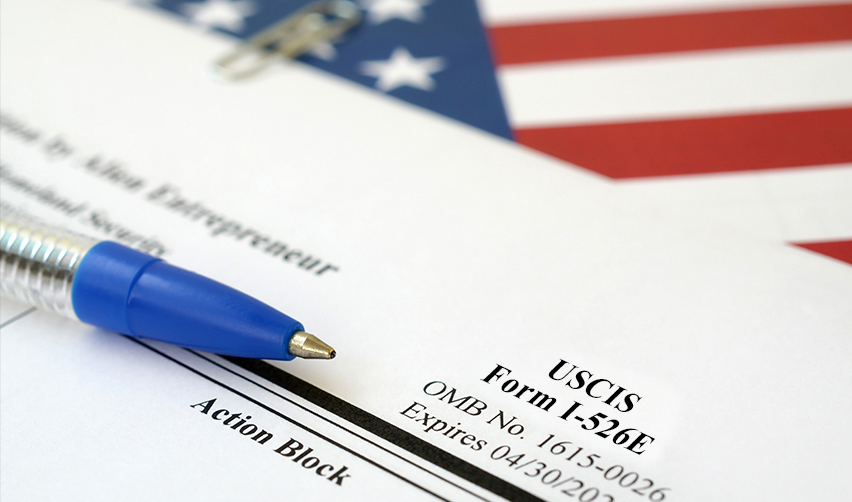
There are three major steps to the EB-5 investment process. First, a foreign national files the I-526 or I-526E petition to USCIS. This form serves to demonstrate an investor’s compliance with program regulations and provides information on the applicant, their investment, and the NCE.
After USCIS approves an investor’s initial EB-5 petition, they become eligible to apply for the EB-5 visa. This will grant lawful conditional resident status to the investor for two years.
Within the final 90 days of an investor’s conditional residency period, they must file Form I-829. This petition proves to USCIS that the investor has successfully met all program requirements. Upon I-829 petition approval, an investor and their dependent family members receive their permanent U.S. Green Cards.
The EB-5 investment process is complex, involving scores of supporting documentation specific to each investor and each NCE. As such, experienced immigration attorneys provide invaluable assistance throughout the process, often compiling and filing petitions on behalf of investors. Consulting an immigration attorney is strongly encouraged for every EB-5 applicant. They can answer any questions, provide advice, and connect investors to other industry experts as needed. Doing so aids in a smooth and successful EB-5 immigration process and reduces the chance of any complications.
The I-526 Petition
There are two versions of the initial EB-5 application: Form I-526 and Form I-526E.
Form I-526, Immigrant Petition by a Standalone Investor, is filed by direct investors. Form I-526E, Immigrant Petition by a Regional Center Investor, is for those who invest through the EB-5 regional center program
Regardless of which version an investor files, it must be accompanied by documentation that demonstrates they have met all the criteria of the EB-5 program. This includes:
- Evidence of investment;
- Evidence of lawfully-sourced funds;
- Evidence of NCE eligibility.
The USCIS filing fee for the I-526 and I-526E petition is $3,675. This fee is nonrefundable, regardless of whether or not the petition is approved.
Regional center investors—who file Form I-526E —are also required to send an additional, separate amount of $1,000. This additional fee goes to the EB-5 Integrity Fund, which helps USCIS to adjudicate more I-526E petitions and investigate any compliance issues with regional centers and investors.
An $85 biometrics fee is also required at the time of filing, whether or not USCIS ultimately requires an applicant to appear for a biometrics services interview — for fingerprinting, background checks, photographs, etc.
Apply for EB-5 Visa
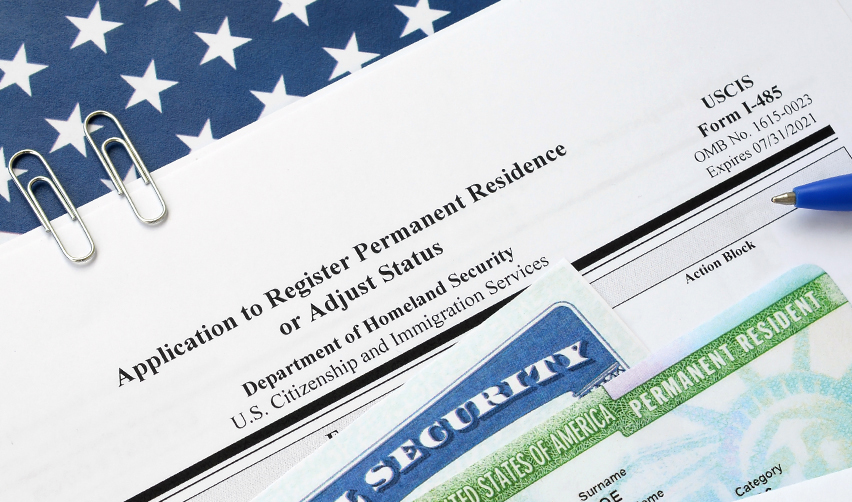
After USCIS approves an investor’s initial EB-5 application, they can then get a conditional U.S. Green Card.
Adjustment of Status
If an investor is already lawfully residing in the United States under a different status, they can file Form I-485 to adjust their visa status. This route offers the advantage of concurrent filing, meaning EB-5 investors can file Form I-485 alongside their I-526 or I-526E petition. Along with reducing wait times for petition adjudication, concurrent filing also enables an investor to obtain a travel permit and employment authorization document (EAD) while waiting for their EB-5 visa.
The following documentation must be submitted alongside Form I-485:
- Proof of eligibility;
- Personal records;
- Photos;
- Passport and nonimmigrant visas;
- Criminal history records (if applicable);
- Medical records;
- Biographic information;
- Biometrics.
A filing fee of $1,140 and a biometric fee of $85 must also accompany the application. Applicants age 79 or older are not required to pay the $85 biometrics fee.
Consular Processing
After I-526/I-526E approval, investors living abroad must instead file Form DS-260 at the U.S. consulate or embassy in their home nation. Once approved, the applicant is granted conditional permanent resident status in the U.S.
There are two stages of the DS-260 application process. In the first stage, the applicant must provide biographical information, job history covering the previous decade, information on previous places of residence, and any record of military service.
The second stage of the process involves an interview conducted at the U.S. consulate or embassy in the applicant’s home nation. For this interview, the applicant will be required to provide certain documentation, which may include their birth certificate, passport, and any marriage or divorce certificates.
The I-829 Petition

Viewed as the final step in the EB-5 visa process, the I-829 petition serves to prove to USCIS that the investor has met all program requirements and is eligible for a permanent U.S. Green Card. Once the petition is approved, the investor’s conditional residency restriction is removed and that investor, their spouse, and their unmarried children under the age of 21 can live in the United States permanently.
To successfully file an I-829 petition, the applicant must present evidence to USCIS that they have met the requirements of the EB-5 program and qualify for the removal of conditions on their permanent resident status. The main categories are as follows:
- Evidence of conditional permanent resident status;
- Evidence related to the investor’s commercial enterprise, investments, and job creation;
- Evidence for petitioners filing as a former spouse or as a spouse or child whose investor spouse or parent has died;
- Evidence of criminal history.
The USCIS filing fee for the I-829 petition is $3,750. A biometrics service fee of $85 is also required for each conditional permanent resident included on the application — investor, spouse, and any eligible children.
Upon I-829 approval, an investor qualifies for a permanent Green Card. After five years of residing in the U.S. (including the two-year conditional residence period), EB-5 investors can apply for citizenship.
Getting Started on the EB-5 Process
While the EB-5 visa process requires a substantial investment of time and money, it is hailed as one of the quickest and most straightforward routes to a permanent U.S. Green Card. With the dual help of a dedicated EB-5 professional from EB5AN and a licensed immigration attorney, immigrant investors can pursue a permanent U.S. Green Card and eventually U.S. citizenship.
With a high demand for other immigration pathways, the EB-5 program is perhaps the best way for Indian nationals to immigrate to the United States.
EB5AN is a leading EB-5 firm in the United States. Working with hundreds of foreign investors, industry experts, and immigrant attorneys has made EB5AN one of the most reliable sources for potential investors who would like to learn more about the program.
To find out more information about the EB-5 program and how Indian investors can qualify, book a free consultation with our team.